Car racing was a popular spectator sport during the Golden Age of Hollywood and movie studios were quick to recognize the potential for movies that could capitalize on this trend. Automobiles, after all, were a symbol of American freedom and progress. By tapping into this cultural zeitgeist, racing movies could appeal to a broad audience. And, of course, racing provided the chance for thrilling and visually exciting high-speed action that was perfect for the big screen.
And then there were the heroic and charismatic characters – racecar drivers, mechanics, team owners, and beautiful girls – who embodied the spirit of American achievement and individualism. These characters resonated with audiences and helped make this genre a favorite among moviegoers. Here are ten of our favorite car racing-themed films of the Golden Age of Hollywood.
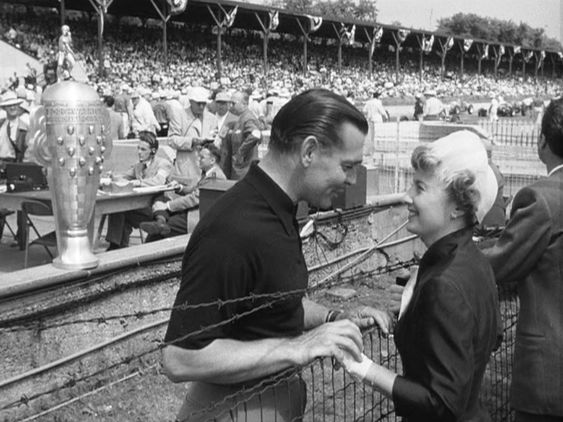
To Please a Lady
To Please a Lady, which debuted in 1950, was directed by Clarence Brown and starred Clark Gable and Barbara Stanwyck. The movie tells the story of a daredevil racing driver named Mile Brannan, played by Gable, who clashes with a newspaper reporter named Regina Forbes, played by Stanwyck, after she writes an article criticizing his reckless driving.
As the story unfolds, Brannan and Forbes become attracted to each other. Brannan, struggling to revive his racing career after a serious accident, agrees to let Forbes write a series of articles about him in the hopes of generating positive press. Their personal relationship, however, is complicated.
To Please a Lady is notable for its exciting race scenes which were shot on location at the Indianapolis 500 and other racetracks. Fans were elated to see Gable and Stanwyck on screen together once again. The two had previously starred together in the 1931 film, Night Nurse.
The Crowd Roars
The 1932 Howard Hawks-directed drama, The Crowd Roars, starred James Cagney, Joan Blondell, and Ann Dvorak. The movie centers around the lives of racecar drivers and their families, particularly one driver named Joe Greer, played by Cagney, as he struggles to make it to the top of his profession. While focusing on his career, he also needs to balance his love life and his relationship with his brother Eddie, played by Eric Linden, who also races but lacks Joe’s talent.
In The Crowd Roars, Joe ends up competing against his brother in a high-stakes race, with his career and his personal relationships hanging in the balance. The film explores themes of brotherhood, loyalty, and ambition amid the high-pressure world of professional racing.
The Crowd Roars features action-packed footage shot on location at the Indy 500. The movie was so well-received that it was remade twice, first in 1939 as The Roaring Twenties – also directed by Hawks and starring Cagney – and later as Thunder in Dixie in 1961.
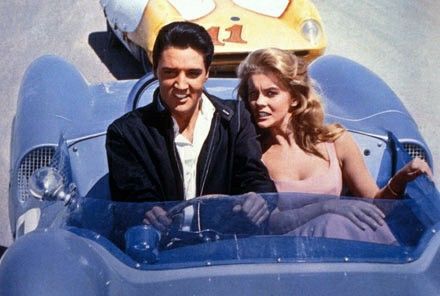
Viva Las Vegas
Yes, it is a musical and, yes, it stars Elvis, but at its heart, the 1964 film Viva Las Vegas is a racing movie. Set in Las Vegas, it follows the story of racecar driver Lucky Jackson, played by Elvis Presley, as he tries to win the Las Vegas Grand Prix and the heart of the beautiful dancer Rusty Martin, played by Ann-Margret.
In addition to the musical numbers and lively dance sequences, Viva Las Vegas included some rousing racing scenes. The movie was a huge commercial success and is often cited as one of the most popular Elvis films. Viva Las Vegas was written by Sally Benson and directed by George Sidney.
The Big Wheel
Directed by Edward Ludwig, the 1949 film The Big Wheel starred Mickey Rooney and Thomas Mitchell. The movie tells the story of Billy Coy, played by Rooney, a young man who dreams of becoming a successful racecar driver despite his father’s disapproval. Billy gets his chance to make it big when he’s hired as a mechanic for a racing team, but his ambition and arrogance leads him down a dangerous path.
In the story, Billy faces a series of challenges and setbacks that test his character and commitment. Thomas Mitchell, cast as Billy’s father, serves as a moral compass for Billy throughout the film. Interspersed with the drama are riveting racing scenes that captured the heart-pounding appeal of the sport.
Johnny Dark
The 1954 film Johnny Dark, starring Tony Curtis and Piper Laurie and directed by George Sherman, tells the story of a talented young mechanic, played by Curtis, who dreams of becoming a top racecar driver. When he meets and falls in love with a wealthy socialite named Liz, played by Laurie, Johnny sees his chance to make his dreams come true, but he soon finds obstacles on his road to success.
Johnny Dark is notable for its portrayal of the class tensions and social divisions of 1950s America, as well as its exploration of the themes of ambition, love, and personal sacrifice. In the film, Johnny is involved in a serious accident that threatens to derail his dreams. He must also navigate the social and economic barriers that separate him from Liz and her privileged world.
While Johnny Dark may not be as well known as some of the other racing films of the era, it showcases Hollywood’s fascination with the world of fast cars.
Thunder in Carolina
Thunder in Carolina is a 1960 drama directed by Paul Helmick and starring Rory Calhoun and Connie Hines. The movie tells the story of Mitch Cooper, played by Calhoun, a talented racecar driver who dreams of making it big in the world of professional stock car racing. His ambitions are tested when he meets and falls in love with a local girl named Abby, played by Hines, and then discovers that her brother is his biggest racing rival.
With the focus on stock car racing, Thunder in Carolina is significant for its portrayal of the competitive and dangerous sport. It is also notable for featuring appearances by several real-life racing legends, including Junior Johnson and Ned Jarrett.
The Iron Maiden
A British drama, the 1962 film The Iron Maiden tells of a struggling British racing team that enters a revolutionary new car, nicknamed “The Iron Maiden,” in the famous Monte Carlo Rally. The film was directed by Gerald Thomas and starred Michael Craig and Anne Helm.
In The Iron Maiden, the team faces a series of setbacks, including a rival team’s attempt to teal their designs and a serious accident. The film featured exciting footage of actual Monte Carlo rallies from the era and featured cameos by several real-life racing legends, including Stirling Moss and Graham Hill. The thrilling action scenes and the compelling story kept audiences on the edge of their seats.
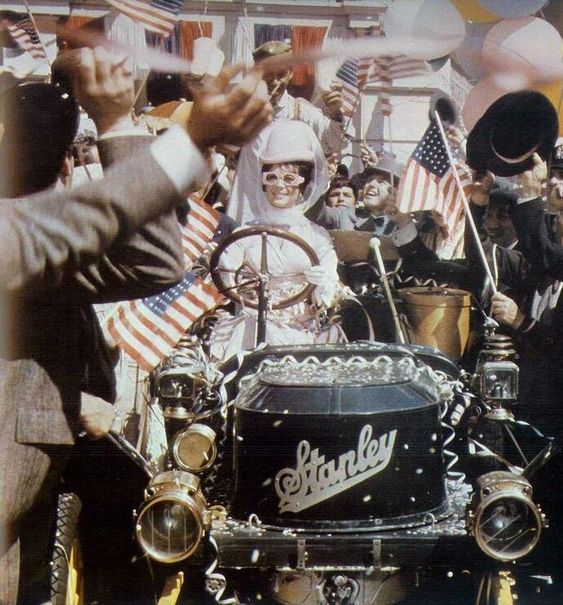
The Great Race
The Great Race is a 1965 comedy film starring Tony Curtis, Jack Lemmon, and Natalie Wood. It is a spoof of the classic car races of the early 1900s and tells the story of a motley crew of drivers who compete in a race from New York to Paris.
The film features a number of elaborate and hilarious scenarios, including a pie fight and a wild chase scene through a small village. The drivers encounter a series of comical obstacles, including treacherous terrain, zany stunts, and a scheming villain who will stop at nothing to win the race.
The Great Race was a critical and commercial success and became a cult favorite. Audiences loved the film’s slapstick humor, high-energy performances, and its attention to period details.
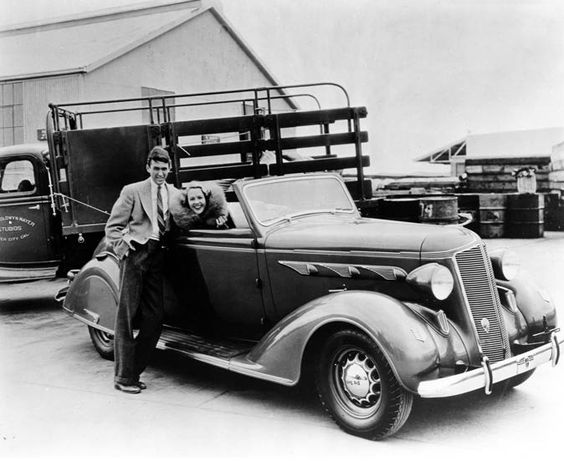
Speed
James Stewart starred in the 1936 action movie Speed. The film’s plot centers on a Detroit mechanic and car tester named Terry Martin, played by Stewart, who longs to be a racecar driver. He vies for the attention of a Jane, a young woman, played by Wendy Barrie, who was recently hired to work in the car company’s publicity department. But there is another employee, an automotive engineer who is Terry’s rival, flirting with the new girl.
The employees take their cars to the Indianapolis 500 to test a new carburetor and Jane convinces the company vice president to invest in Terry’s inventions, but it fails catastrophically in Indianapolis, yet Jane, who is revealed to be the company owner’s niece, continues to advocate for Terry. The next test run, at Muroc Dry Lake in California, was enough for Terry to prove he has what it takes to succeed in the industry.
MGM rushed production of Speed to capitalize on the 1935 event in which driver Malcolm Campbell broke the world speed record at the Bonneville Salt Flats. But the studio had a limited budget, so the film was shot at Muroc instead.
The Racers
Kirk Douglas, Bella Darvi, and Gilbert Roland starred in the 1953 drama, The Racers. The movie tells the story of Douglas’s character, Gino Borgesa, a talented but reckless driver who hopes to win the prestigious Mille Miglia race in Italy.
In addition to financial difficulties and a rocky relationship with his girlfriend, played by Darvi, Gino has to contend with a rival driver, played by Roland. If that wasn’t enough, Gino becomes addicted to pain meds after being injured in a horrific crash. The cinematography of The Racers made this film memorable. The race scenes and crashes were realistically filmed and enhanced the plot.