The 1959 romantic drama, A Summer Place, was popular with moviegoers who flocked to see teen heartthrobs Sandra Dee and Troy Donahue as young lovers who are navigating their first serious romance while also dealing with their parents’ affair. The theme song for A Summer Place, an instrumental piece composed by Max Steiner, was a chart topper that spent more than two months in the number one spot on the Billboard chart in 1960. Yet, despite the attractive young stars and the hit theme song, critics were mixed in their reviews. The reason for this? The film’s controversial subject matter.
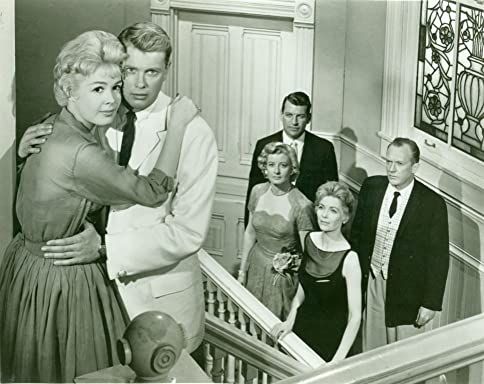
Based on the Sloan Wilson novel of the same name, A Summer Place was directed by Delmer Daves. The story revolves around two teenage lovers, Molly, played by Sandra Dee, and Johnny, played by Troy Donahue, who meet and fall in love while spending the summer at a resort on Pine Island, Maine. The resort is run by Johnny’s parents, Bart and Sylvia Hunter, played by Arthur Kennedy and Dorothy McGuire. The couple have an unhappy marriage and Bart has a drinking problem. When he receives a reservation from an old friend, Ken Jorgenson, played by Richard Egan, Bart is not excited to be reunited with him.
Joining Ken for the summer in Maine is his wife, Helen, played by Constance Ford, and their daughter, Molly. Ken and Helen are also unhappy in their relationship and the two clash often over raising their daughter, who is fast becoming a young woman. The audience learns that Ken and Bart’s wife, Sylvia, were teenage lovers twenty years prior when Bart and Ken worked together at the resort. The reason for his return is to rekindle their flame.
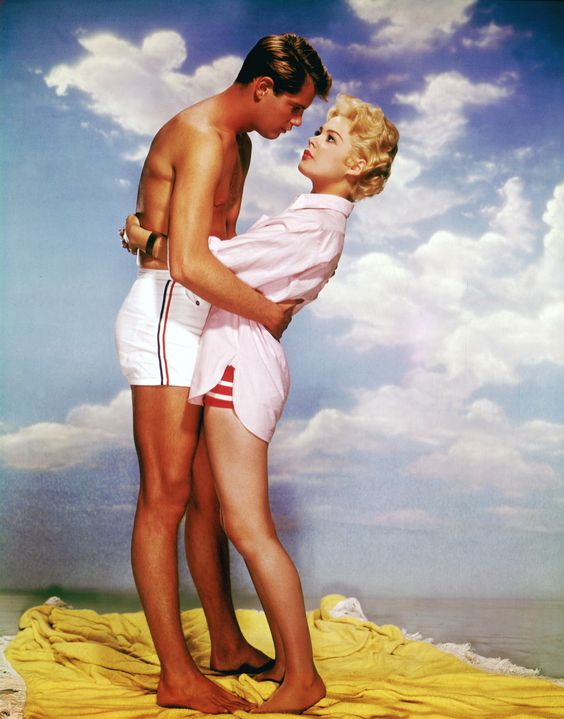
As Ken and Sylvia enter into an affair behind the backs of their spouses, their children, Molly and Johnny also fall in love. The concept of adultery was quite controversial in the 1950s, so many moviegoers were shocked at the storyline. In addition, there was Helen’s fixation with Molly’s virginity. At one point, Helen becomes convinced that Molly and Johnny had sex, so she hauls her daughter to a doctor who forcibly examines her to determine she is still a virgin. This angers Johnny who threatens Helen. As it all blows up, the extramarital affair is revealed.
After both couples go through very public divorces, Sylvia and Ken resume their romance, in a case of double standards, the parents send Molly and Johnny to separate boarding schools on other sides of the county to keep them apart. Some time later, after Ken and Sylvia marry, Molly and Johnny agree to visit them, but it is really just a ploy for the teens to see each other again. This time, Molly and Johnny really do sleep together and Molly becomes pregnant. The teens run off to get married, but the justice of the peace refuses to marry them because they are underage. While Bart and Helen are furious with them, Ken and Sylvia, who were teen lovers themselves, are supportive. Molly and Johnny are allowed to marry and live happily ever after.

So, to recap, A Summer Place touches on purity culture, adultery, underage sex, alcoholism, divorce, unprotected sex, and teen pregnancy. The film quickly earned a reputation for depicting taboo topics. It was considered quite daring and provocative for the movie to address uncomfortable topics that were not typically included in Hollywood films of the 1950s. Film critics simply didn’t know what to make of A Summer Place. Some of them praised the film for its melodramatic storytelling and lush cinematography, while others remarked on the performance of the stars. One review called it “a well-made bit of entertainment” but warned moviegoers that the movie was devoted “almost exclusively to sex.” The New York Times called it one of the most “garishly sex-scented movies in years.”
When it was released, A Summer Place was particularly popular among teen audiences. In fact, it was a common “date night” flick, though not one that the parents of teenage daughters approved of. In the decades since, A Summer Place has gained a cult following and is often considered to be a classic romance drama from the Golden Age of Hollywood.