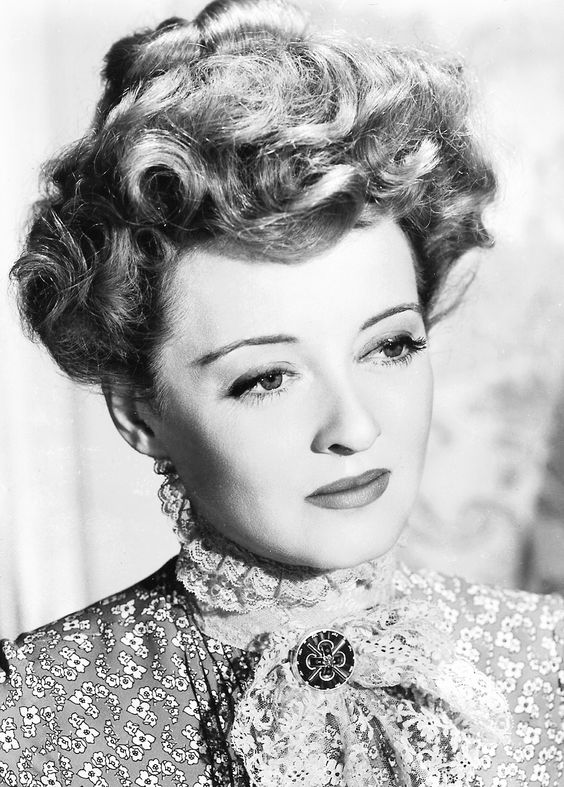
The 1941 drama, The Little Foxes, about the turn-of-the-century Southern family and their in-fighting and back-stabbing may have foreshadowed the real-life behind-the-scenes drama that took place on the set of this film. Although The Little Foxes was a box office success and was nominated for an incredible nine Academy Awards, tensions on set ran high and the backstage drama was often centered on director William Wyler and star Bette Davis. Let’s take a look at some of the conflicts.
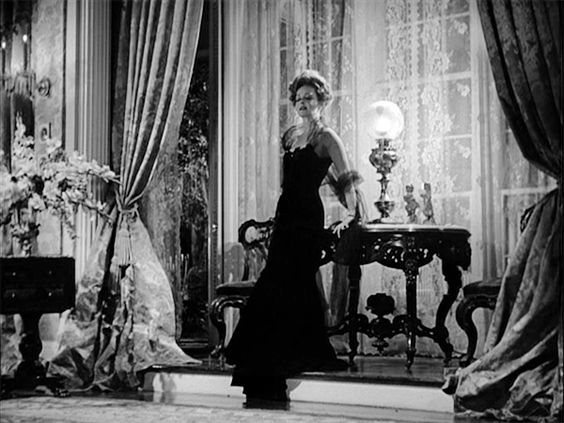
Bette Davis and William Wyler had worked together before they filmed The Little Foxes. The previous year, Wyler directed Davis in the 1940 film, The Letter, and they were both nominated for Academy Awards for this film, in the Best Director and Best Actress categories. Neither one brought home an Oscar for The Letter.
According to rumors, the only reason why Bette Davis was cast in the film was to settle a gambling debt. Reportedly, many of the Hollywood studio moguls, including Jack Warner, Louis B. Mayer, Darryl F. Zanuck, and Samuel Goldwyn often played high-stakes poker together. As the story goes, Warner racked up a $300,000 gambling debt to Goldwyn who agreed to settle the debt if Warner would loan out Bette Davis to star in RKO’s next film.
At the time, casting was underway for The Little Foxes. The studio had initially offered the starring role of Regina to actress Miriam Hopkins, but William Wyler refused to work with her. He did not disagree with Bette Davis taking this role, either because they previously worked together or because the studio forced him to cast Davis in the role.
Bette Davis and William Wyler had different visions for The Little Foxes. Even though Wyler was the director, Davis wasn’t shy about voicing her opinion. For example, Davis wanted to portray Regina as a hard, ruthless, cutthroat woman, but Wyler wanted to see this character be softer and more sympathetic.
Davis and Wyler disagreed with the set design, too. Davis noted that the family home where much of the action took place appeared too elegant and fancy for a family who was supposed to be experiencing a financial challenge.
The star and the director even clashed over Davis’s makeup for the film. Bette Davis brought in Perc Westmore, a famous Hollywood makeup artist, to devise a pale, white, mask-like appearance to her makeup. Davis wanted it to be symbolic of her character’s cold, heartless demeanor. William Wyler laughed at the makeup. He told Davis she looked like a Kabuki performer, not a Southern lady.
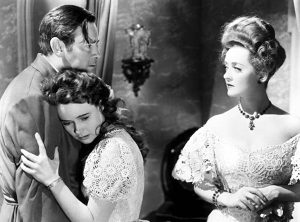
As William Wyler grew more frustrated with Bette Davis’s take on the character of Regina, he encouraged Davis to attend the Broadway version of The Little Foxes, starring Tallulah Bankhead. At first, Davis refused to go see the stage adaptation of the story, but she eventually gave in. She regretted it. She felt that Wyler forced her to mimic Bankhead’s portrayal of the character, which Davis had interpreted differently. Bankhead’s Regina was a fighter who was just trying to get her fair share in a misogynistic Old South world. Davis wanted to play Regina as clever and calculating.
Tensions between Wyler and Davis came to a head and Bette Davis walked off the set of The Little Foxes. The studio was reluctant to recast her role because it would mean a bunch of costly retakes. Then Davis heard rumors that the studio was going to replace her with either Miriam Hopkins, the original choice for the role, or with Katharine Hepburn. Davis returned to the set and she and Wyler agreed to cordially finish the film.
Just like their previous film project, both William Wyler and Bette Davis were nominated for Academy Awards for The Little Foxes. The film also received nominations in the Best Picture, Best Actress in a Supporting Role, Best Screenplay, Best Art Direction, Best Film Editing, and Best Musical Score categories. The Little Foxes failed to bring home any Oscars.