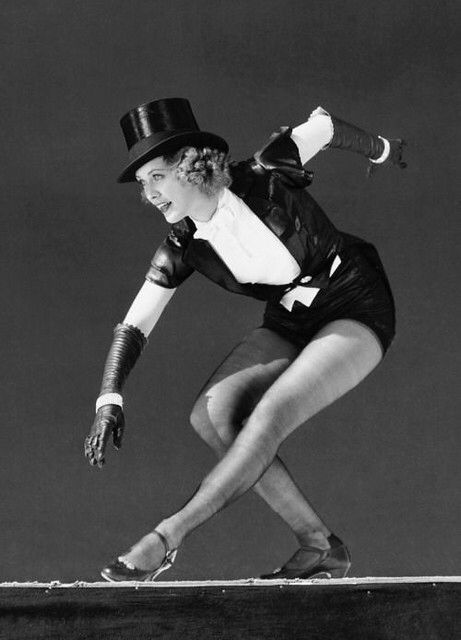
According to insider talk, Metro-Goldwyn-Mayer was in danger of bankruptcy as the 1930s were drawing to a close, but the studio was saved thanks in part to the tap-dancing talents of Eleanor Powell, one of the greatest dancers of Hollywood’s Golden Age. Powell’s performance in Broadway Melody of 1936, her first starring role, was such a hit with audiences that MGM got a much-needed boost of revenue and Eleanor Powell became a sought-after dancer.
Broadway Melody of 1936 was so well-received that MGM filmed a couple of sequels, Broadway Melody of 1938 and Broadway Melody of 1940, also showcasing the high-energy tap routines of Eleanor Powell. In Broadway Melody of 1940, which featured the music of Cole Porter, Powell was cast opposite Fred Astaire. Although Astaire is usually linked to his long-time dancing partner, Ginger Rogers, Astaire and Powell were magic together. Their dance routine to Cole Porter’s “Begin the Beguine” that appeared in Broadway Melody of 1940 is widely considered the greatest tap dance in cinematic history.
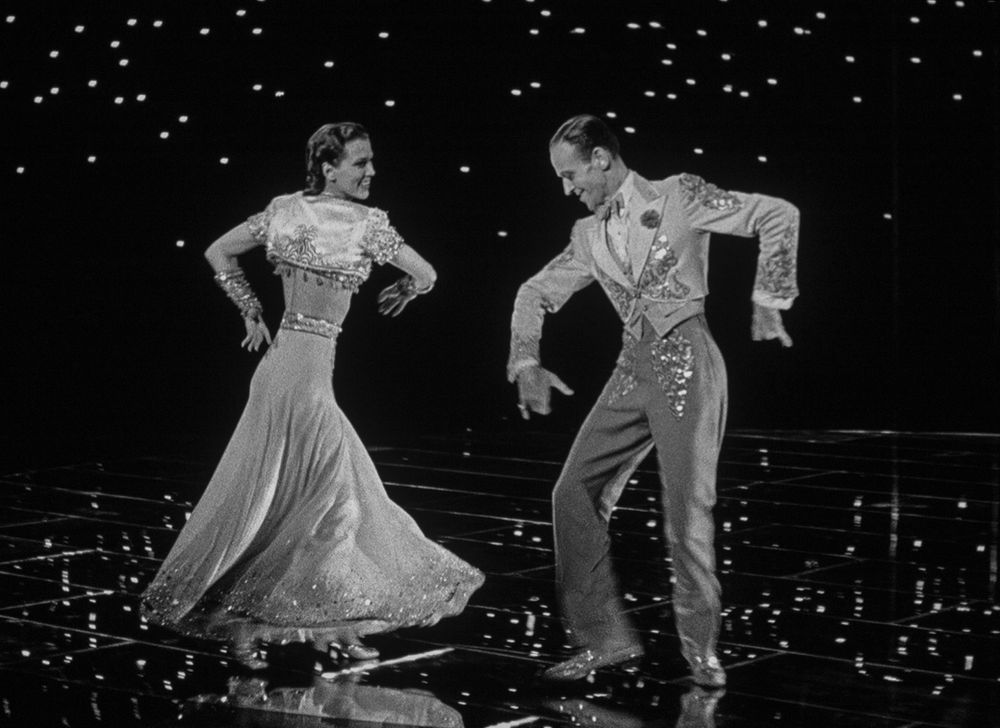
Everyone at the time said that Eleanor Powell was the only female dancer who could out-dance Fred Astaire, and according to Astaire’s later autobiography, he was rather intimidated to dance with Powell. He was quoted as saying that Powell could “really knock out a tap dance in a class by herself.”
Eleanor Powell befriended dancer Bill “Bojangles” Robinson in New York City before they both started working in film. Powell was frustrated about the discrimination and segregation that Robinson, as an African American, had to endure. Robinson was not allowed to enter theatres or venues via the main entrance but had to go through a back door. According to stories, Powell would go to the back door with Robinson. She even politely forced her hosts to treat Robinson equally. For example, if someone offered her a glass of water, she would respond by saying, “Yes, and I’m sure Mr. Robinson would like one, too.”
Although most of the films she was in were designed to show off Eleanor Powell’s extraordinary dancing, she also acted. And sang. Her singing voice, however, was dubbed with a professional singer. She shared the screen with some of the biggest names in the Golden Age of Hollywood, including James Stewart, Nelson Eddy, Robert Young, and Robert Taylor. She appeared in the 1936 film Born to Dance, the 1939 Honolulu, and the 1943 I Dood It.
Although Eleanor Powell’s role in the 1942 film, Ship Ahoy, was not a starring one, the producers relied on her tremendous tap-dancing talent for her character’s role in the pivotal moment of the film. During a tap-dancing routine, she taps out a message in Morse code to a secret agent.
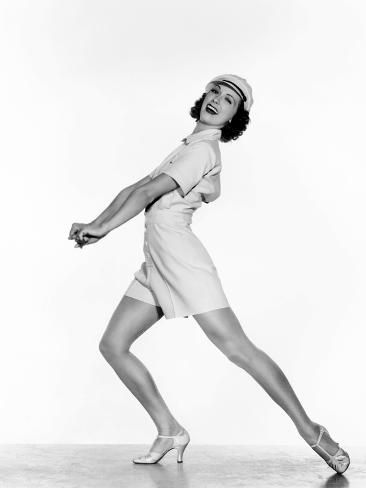
Powell’s dazzling personality, her energy, and athleticism showed Hollywood producers and fans of the cinema that tap dancing wasn’t just for men. And she also proved that she didn’t need to share the spotlight with anyone else. Her solo dance routines were show-stoppers. She surprised her fans with flips, splits, gravity-defying moves, and even in one routine, “Lady Be Good” Powell danced with a trained dog … a dog she trained herself. She always choreographed her own dance numbers. When dancing with a partner, like when she performed with Fred Astaire, she collaborated on the choreography, but she was not shy about making sure her own creative vision shined through.
Powell’s insistence on creative control of her dance numbers extended to the film editing process, too. She took a major role in the film editing process … even learning the technical aspects of post-production editing … because she wanted the audience to understand the finer points of the routine.
In the mid-1940s, Eleanor Powell’s career started a downward spiral after she took several months off to recuperate from gallstone surgery, but Hollywood studios were also shifting away from the musical song and dance films that were so popular in the 1930s. Powell, who married actor Glenn Ford, retired from Hollywood to raise their son, Peter.