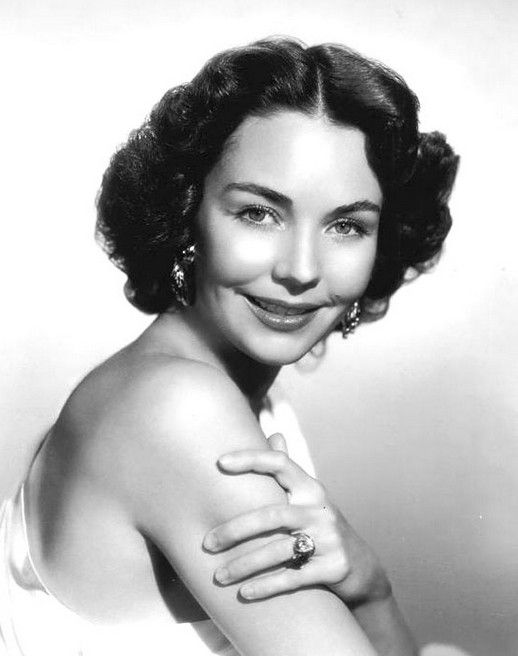
The fairytale version of the romance between Hollywood director David O. Selznick and beautiful young actress Jennifer Jones follows that Selznick discovered the young beauty, recognized her potential, and made her a star … and, of course, they fell in love and got married. But that sanitized story does not paint the whole picture. In reality, Selznick groomed, controlled, and manipulated Jones, and Jones was a fragile, insecure young wife and mother who abandoned her family for Selznick and the fantasy of stardom he showed her.
Jennifer Jones was born Phylis Lee Isley in Oklahoma in 1919. Both her parents had acted in the past and she wanted to be an actress, too. She attended the American Academy of Dramatic Arts in New York City in 1938 where she met another aspiring actor, Robert Walker. The two married, had two sons together, and moved to Hollywood to seek their fortune and fame. Robert Walker found steady work in radio and Phylis, as she was still called, took part-time modeling gigs.
While David O. Selznick later claimed to have discovered her working as a department store clerk, the reality was that Phylis Isley Walker attended an audition for a film that was being produced by Selznick. In the middle of the audition, however, Phylis burst into tears and fled. She was plagued with self-doubt her entire life and was certain she was blowing the audition. Selznick, however, saw her and thought she was the most beautiful woman he had ever seen. He had his secretary track her down and invite her back to the studio where Selznick offered her a seven-year contract.
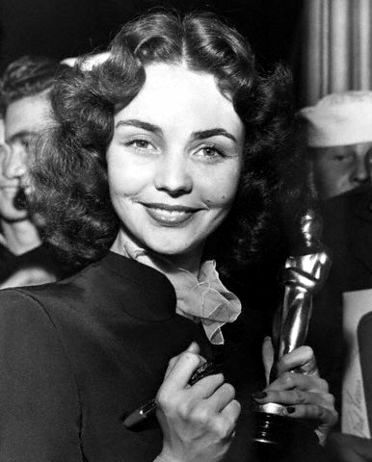
Almost immediately, David O. Selznick took control of Phylis Isley’s life. He changed her name to Jennifer Jones, gave her a glamorous new look, and asked her to keep her husband and children in the shadows. He presented her as a fresh young face and the fact that she was a wife and mother didn’t fit the ingénue image he was trying to create.
Jennifer Jones took a small role in the 1939 film The Hunchback of Notre Dame and appeared in a few other Selznick films. Her big break came in The Song of Bernadette in 1943 for which Jones earned an Academy Award for Best Actress. She followed this up with starring roles in the 1946 film Duel in the Sun and the 1948 film, Portrait of Jennie.
In Duel in the Sun, Selznick tried to exploit Jones as a sexy siren, but she was so uncomfortable in this role that it became emotionally damaging for her. One scene in the film called for her to dance seductively. She failed so miserably that the scene was cut. In another scene, Jones’s character was raped. During the filming of this scene, the entire cast and crew flocked to the set because they wanted to see how the awkward Jones handled it. The additional people watching her only made her anxiety level higher and the scene was excruciating. For other scenes, Selznick forced Jones to wear extremely low-cut costumes that showed her breasts, adding even more to her nervousness and insecurities.
Although the two were married to other people, Jennifer Jones and David O. Selznick became lovers. Selznick controlled more and more aspects of Jones’s life. He dictated who she could see and where she could go. He managed her movie roles and even forbade her from watching the daily takes from her movies because seeing herself on film made her even more insecure.
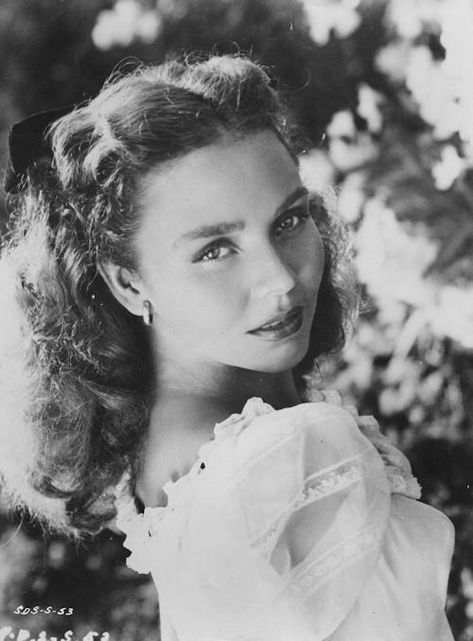
Jones’s lack of confidence and insecurities led her to rely on Selznick even more. She divorced her husband and left him with their children. Selznick, however, did not divorce his wife, although she was well aware of the affair. As her fame grew, so did Jones’ self-doubts. She spent hours dressing in the morning and froze at the thought of doing press interviews. The only way Selznick could get her to grant interviews was to ply her with martinis.
When Selznick’s wife finally left him, it wasn’t because of Jennifer Jones. It was Selznick’s out of control gambling addiction. He reportedly gambled away more than a million dollars in one year. He and Jennifer Jones were married on July 13, 1949, five years after they met.
Jennifer Jones endured a mental breakdown and a suicide attempt, but she continued acting. She gave birth to a child with Selznick. Although Selznick no longer produced films in Hollywood, he remained firmly in control of Jennifer Jones and carefully honed her public image. He often clashed with the directors on her films because he didn’t share their vision for his wife’s role. Despite this, Jones had a successful film career and has been called one of the most beautiful actresses of the Golden Age of Hollywood. Sadly, though, her story is one of an emotionally fragile woman who was exploited by a powerful man who was enamored with her beauty.