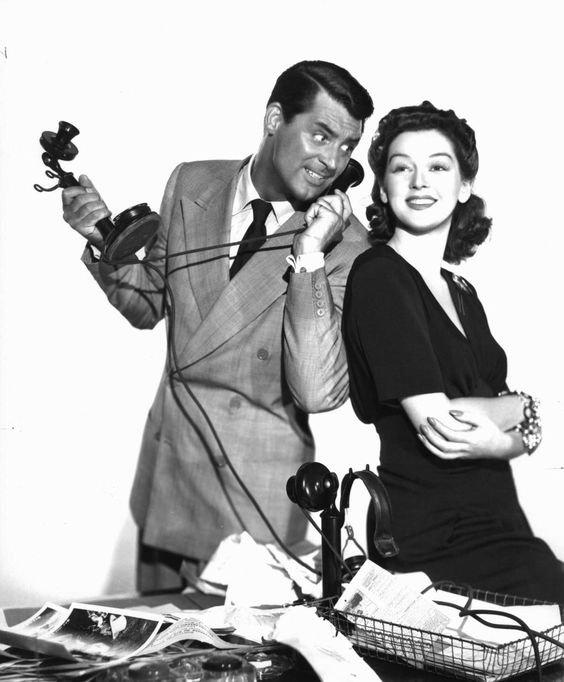
The 1940 Columbia Pictures comedy, His Girl Friday, may seem like a screwball romp of a film starring eye candy performers, Cary Grant and Rosalind Russell, but when we take a closer look, we find a surprisingly strong female character who defies the gender roles of the day and demonstrates that a woman can be equal or superior to her male co-workers. Let’s look at how Rosalind Russell’s character, Hildy Johnson, shaped attitudes about working women in the 1940s.
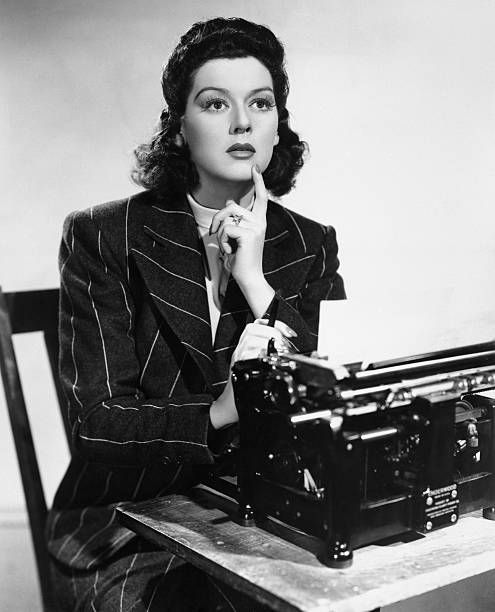
First, let’s talk about the title of the film. A “girl Friday” is an archaic term first coined in the late 1920s to describe a female assistant who does a variety of jobs in an office. It was adopted from the expression “Man Friday,” which came from a character in the 1719 Robinson Crusoe, written by Daniel Defoe. Like the character in the book, a Man Friday is a servant or personal assistant to a person of higher social standing or a workplace superior. The title of the film, His Girl Friday, is therefore a bit of a misnomer. It implies that Russell’s character of Hildy Johnson is a helper or assistant to a man in a superior role, yet that is not the case. Hildy Johnson, an ace reporter, is intelligent, capable, and driven.
In the film, Hildy Johnson is a top journalist for a respected newspaper. She is also the ex-wife of the man who is now the newspaper’s editor. She is engaged to another man and plans to leave her career behind to be a housewife, although she does not seem enthusiastic about her domestic future. The editor, Walter Burns, played by Cary Grant, suggests Hildy work on one more story before she marries.
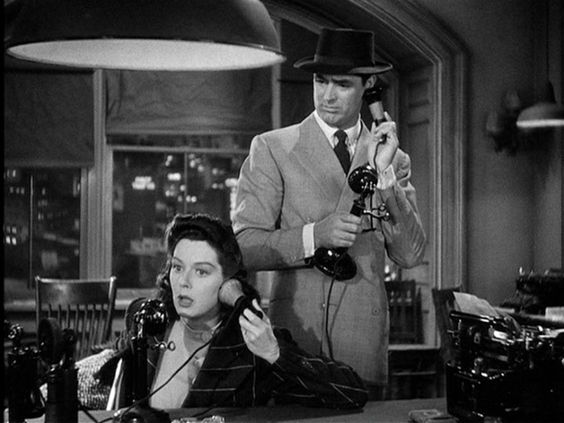
The dialogue of His Girl Friday is witty, clever, and delivered in a fast-paced manner. This is especially true of the film’s protagonist, Hildy. The film touches on the roles of women in society and the tug-of-war between traditional expectations and working women. Hildy is portrayed as smart, ambitious, and competent. In a male-dominated profession, she stands out as a rare successful female who can hold her own with any man.
As the film progresses, the audience sees several examples of how Hildy outshines her male colleagues, challenges gender dynamics, and unapologetically voices her opinions. She is confident, spunky, and willing to go after her goals. She is independent and refuses to be defined solely by her gender or her relationships.
It should be remembered, however, that while the character of Hildy is a role model for women in 1940, her story is presented within the context of a screwball comedy. His Girl Friday often uses exaggerated situations for comic effects. While Hildy is a strong female character, the movie’s overall tone and style is that of zany humor. Hildy’s traits of professionalism and efficiency is meant to be funny because it was non-typical of women at the time.
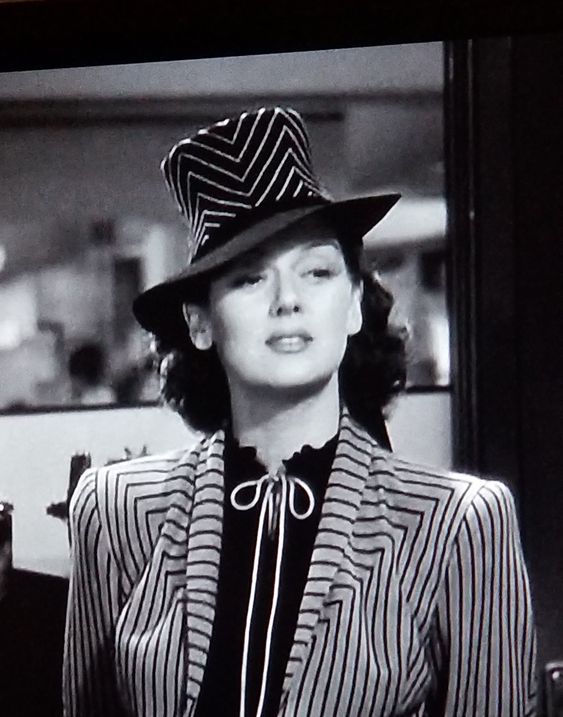
Upon its release, film critics gave His Girl Friday positive reviews. They particularly praised the performance of Russell and remarked about the refreshing gender roles. In later years, however, His Girl Friday has been subjected to criticism for perpetuating certain stereotypes and presenting an exaggerated portrayal of gender dynamics. Some feminists have argued that the film ultimately reinforced the idea that women’s true fulfillment lies in romantic relationships and domesticity, as the conclusion suggests that Hildy’s professional ambitions must take a backseat to her relationship to men, particularly her ex-husband and editor, Grant. In general, audiences were left with the ideas that, 1) smart, capable working women were a novelty, 2) working women were just killing time with a career waiting until they could get married and leave employment behind for domestic life, and 3) a woman should be defined by her relationship to a man.
Watching His Girl Friday today through the modern lens of women’s equality provides a unique glimpse at the conflicting roles of women in the Golden Age of Hollywood and the complex battle between professional careers and domestic life.