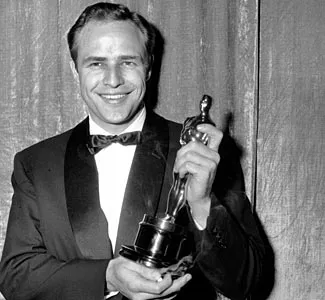
In one of the most memorable moments in the history of the Academy Awards, actor Marlon Brando, a shoo-in to win the Best Actor Oscar at the 1973 awards presentation for his performance in The Godfather, refused to accept his statuette. But this wasn’t Brando’s first Oscar. He already had one his shelf back home that he happily accepted.
Although he wasn’t the first person to refuse an Academy Award, Marlon Brando’s dramatic refusal in 1973 caught Hollywood’s attention. Brando was an advocate for the rights of Native Americans. He was a vocal supporter of the American Indian Movement (AIM), a civil rights organization that sought to improve the lives of Native Americans.
Brando decided to use his nomination as a platform to bring attention to the cause. In an unprecedented move, Brando sent a Native American woman, Sacheen Littlefeather, to accept his Oscar on his behalf. Littlefeather used the opportunity to speak out against the mistreatment of Native Americans.
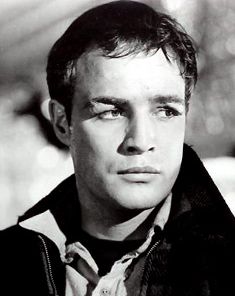
It was a different story when Brando won his first Best Actor Oscar. His portrayal of dockworker Terry Malloy in On the Waterfront in 1954 is considered by many to be one of the greatest performances of cinematic history. On the Waterfront tells the story of a dockworker who finds himself embroiled in a battle against union corruption. This role was unlike anything seen before, and it is no surprise that the movie was awarded eight Academy Awards, including Best Actor for Brando.
Brando utilized method acting and models techniques established by Konstantin Stanislavsky, a Russian actor, for his role in On the Waterfront. It was so groundbreaking that it had a lasting impact on the film industry. His unique brand of method acting was seen as groundbreaking that it set the standard for all actors that followed. His iconic performance inspired many future actors, including Al Pacino, Robert De Niro, and Jack Nicholson.
Marlon Brando’s performance in On the Waterfront earned him the Best Actor Oscar at the 1955 Academy Awards presentation, beating out a tough field of contenders, including Humphrey Bogart for The Caine Mutiny, Bing Crosby for The Country Girl, James Mason for A Star Is Born, and Dan O’Herlihy for The Adventures of Robinson Crusoe. When host Bob Hope announced Brando’s name as the winner, the actor gratefully accepted his award.
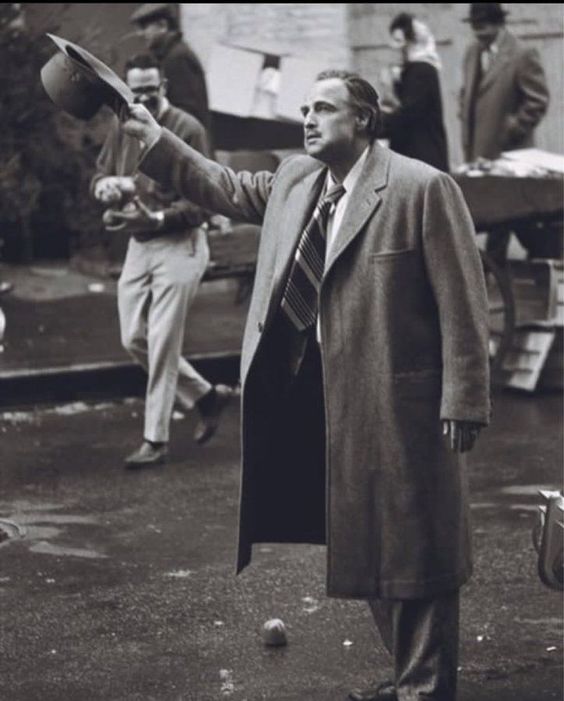
It was in later decades that Brando became involved in activism and took up the cause of Native American mistreatment. When his name was bantered around ahead of the 1973 Academy Awards, the actor, who has earned acclaim for his role in The Godfather, decided to force the Academy to confront the issue. His decision was a bold statement that has resonated through the years, and it serves as an example of the power of using a platform for activism.
Marlon Brando’s refusal of his Oscar for The Godfather was a watershed moment in Golden Age Hollywood. His bold decision to use his platform to bring attention to the mistreatment of Native Americans has left a lasting legacy, however it is worth remembering that Brando had already won a Best Actor Oscar.