The 1954 film, On the Waterfront, starring Marlon Brando as a longshoreman who becomes tangled in the violence and corruption at the New York City docks, was directed by Elia Kazan. The film, now a classic of the Golden Age of Hollywood, was notable for many reasons, including the fact that On the Waterfront was composer Leonard Bernstein’s film score for a non-musical movie.
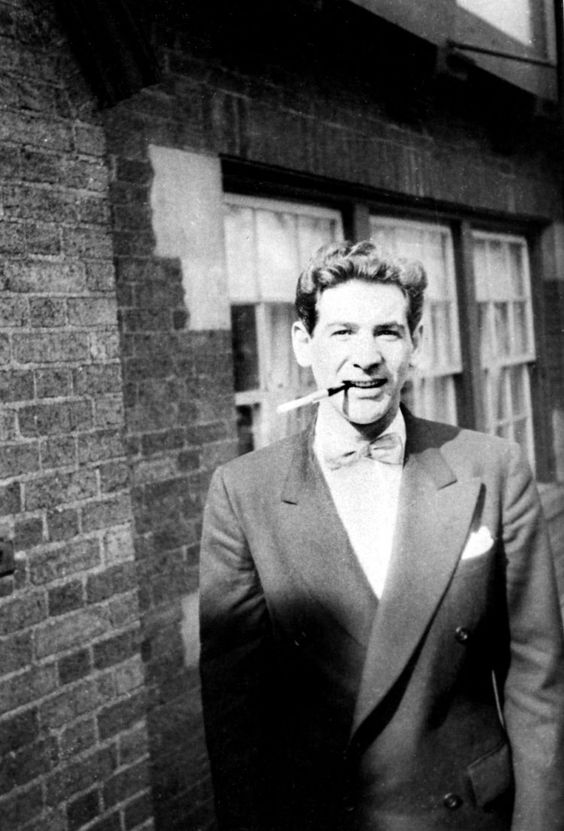
By the 1950s, Leonard Bernstein had built a reputation as one of the most highly regarded and influential composers, conductors, and pianists in the country. His body of work ranged from musical theatre, ballets, and operas to symphonies and chamber music. Bernstein was an expert in a wide range of musical genres, including classical, jazz, pop, and swing. He served as the musical director of the New York Philharmonic for many years and raked in accolades for his dynamic conducting style and his ability to bring out the emotional depth and complexity of the music.
Leonard Bernstein was equally revered for his work in musical theatre. He composed the music for West Side Story, one of the greatest musicals of the era. His work on Wonderful Town and On the Town, as well as other musicals, helped to bridge the gap between classical music and popular culture.
Movie director Elia Kazan reached out to Leonard Bernstein to ask him to write the musical score for his next project, On the Waterfront, in part because Bernstein was already a well-known and respected composer. But the other reason for recruiting Bernstein to the project was because the two men were friends. In their casual conversations of the past, Bernstein had commented that he may be interested in writing film scores. Indeed, he had worked on smaller projects in Hollywood.
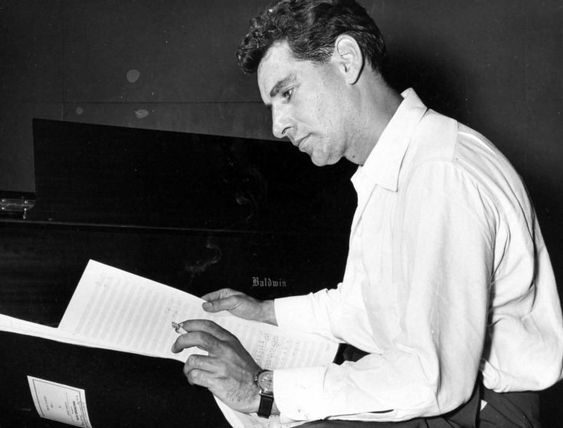
Kazan also understood that Leonard Bernstein brought some powerful name recognition to his movie project, which was certainly a factor in hiring his friend. But he also knew that Bernstein would be able to write music that could underscore the emotions of the film. He was later quoted as saying that Bernstein had the ability to “translate character and emotion into musical terms.”
While it is true that Leonard Bernstein had considered dabbling in film scores, he had never undertaken such a project. In the musicals he composed, the music was used as a way to move the plot along, explain backstories, or cue the audience into the feelings of the characters. But in a non-musical film like On the Waterfront, the music is used to set the mood, create drama, and express emotions.
Reluctantly, Leonard Bernstein agrees to score On the Waterfront. One obstacle he encountered was that he had no working knowledge of film production. Kazan gave him a copy of the script and a rough, unedited cut of the movie. He also gave Bernstein a Moviola machine, an old device that was used by film editors to view the reels of film as they were editing it.
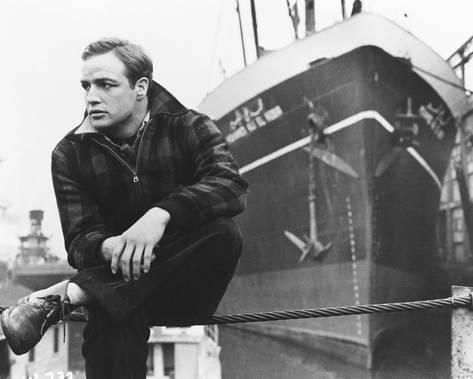
With only this early version of On the Waterfront and a rudimentary tool to watch it, Leonard Bernstein was able to write a powerful and memorable score for the movie that enhances the dramatic tension and emotional impact of the story. The score features a mix of orchestral music, pop, and jazz, and is now considered to be one of the greatest film scores of all time.
On the Waterfront was Leonard Bernstein’s one and only foray into scoring Hollywood films. Most critics agreed – then and now – that Bernstein hit a homerun his first time at bat. But he also realized that his musical interests lie in different directions.
Perhaps the Academy of Motion Picture Arts and Sciences could sense this. While On the Waterfront won an impressive eight Academy Awards at the 27th Academy Awards ceremony in 1955, including Oscars for Best Picture, Best Director, and Best Actor, Leonard Bernstein was not honored with an Oscar for his musical score for On the Waterfront.
Leonard Bernstein was nominated for an Academy Award in the category of Best Music Score for a Dramatic or Comedy Picture, the Oscar went to Dimitri Tiomkin for his work in The High and the Mighty.