Hollywood was much different in the 1930s. It is a sad fact that African American performers did not have the same opportunities as white actors, nor were they cast in spotlight roles. Slowly, groundbreaking men and women broke through the barriers and took brave steps toward racial equality. One such actor was a 57-year-old former Vaudeville tap dancer who was one-half of the first interracial duo to dance together in a movie scene during the Golden Age of Hollywood. The other half was a pint-sized, six-year-old child star. Together they tapped their way through racial barriers.
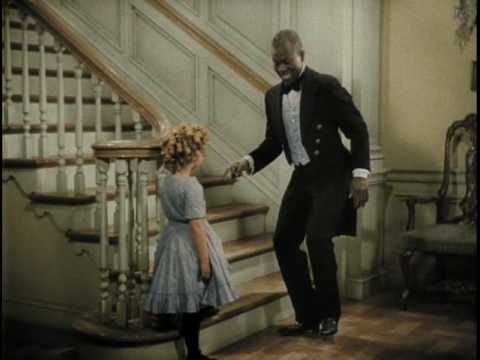
This famous and controversial scene appeared in The Little Colonel, a 1935 comedy-drama that was directed by David Butler. The film starred Lionel Barrymore as an ex-Confederate colonel who reconnects with his former best friend, an African American man named Walker, played by Bill “Bojangles” Robinson, with the help of his estranged daughter, played by Shirley Temple. The Little Colonel was a commercial and critical success, grossing more than $1.8 million at the box office and received mostly positive reviews from critics. The film was also credited with helping to cement Shirley Temple’s status as a child star.
Even in 1935, Temple’s star was on the rise. During the Golden Age of Hollywood, she was a beloved and charismatic young actress, singer, and dancer. One of her most memorable moments in her film career came in The Little Colonel when she and her co-star, Bill “Bojangles” Robinson, tap danced on a staircase. This scene is widely regarded as the first interracial dance depicted in American cinema.
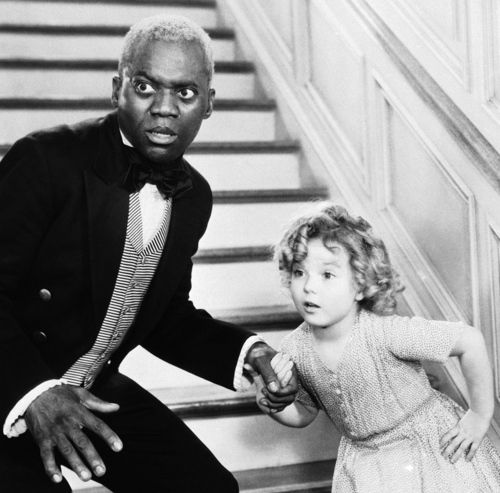
At the time, segregation was still enforced in many parts of the United States, and the idea of a white child dancing with a black man was quite controversial. However, Temple, Robinson, and the film’s director, David Butler, handled the scene with joy and innocence while presenting an uplifting message, therefore it became a landmark moment in Hollywood history.
Bill “Bojangles” Robinson was an iconic tap dancer and actor who achieved an unprecedented level of fame during the early 20th century when African American performers were marginalized. He learned to tap dance as soon as he could walk and started dancing professionally when he was just six years old. His unique style of tap dancing, which combined intricate footwork with a released upper body, became a Vaudeville sensation in the 1910s and 1920s. He was known for his lightning-fast footwork, his effortless grace, and his improv ability.
The idea to pair Bill “Bojangles” Robinson in a dance sequence with young Shirley Temple was the brainchild of Winfield Sheehan, the head of Fox Studio. He was impressed with Robinson as a Vaudeville performer and dancer, but he was unsure if he had the acting chops needed for the role in The Little Colonel. Robinson excelled in his screen test. He was hired to star in The Little Colonel and also to teach Shirley Temple how to tap dance.
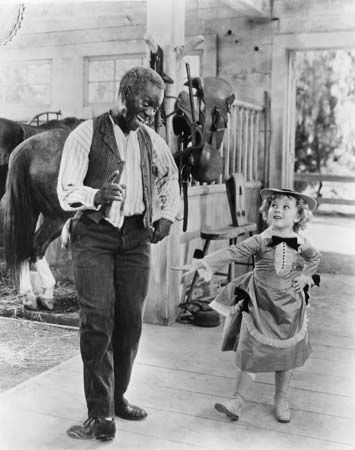
Shirley Temple, like Robinson, had been dancing since she was a toddler. She had always learned dancing by watching her teachers and mimicking their moves. Robinson, whom Temple called “Uncle Billy”, taught her how to tap dance by feeling the beat and listening to the taps. From him, she learned how to become one with the music. During all their dance lessons, Temple held Robinson’s hand – a cultural no-no at the time – but it helped her to match his pace and movements. It seemed so natural and innocent that the studio decided to keep the hand holding as part of the dance routine when filming the famous staircase tap dance scene in The Little Colonel.
Some movie theaters in the South refused to show The Little Colonel because of the interracial dance sequence between Temple and Robinson. Fox Studios received hundreds of letters of protest from viewers who were shocked and outraged over the interracial pairing. Despite this, the staircase tap dance from The Little Colonel was widely celebrated by moviegoers and critics as a joyful and uplifting scene. It marked a pivotal moment in Hollywood’s cinematic history and was viewed as a symbol of racial harmony.
Shirley Temple and Bill “Bojangles” Robinson went on to make several more movies together, and their partnership helped to break down racial barriers in Hollywood. Their work is seen as an important contribution to inclusivity in the entertainment industry.