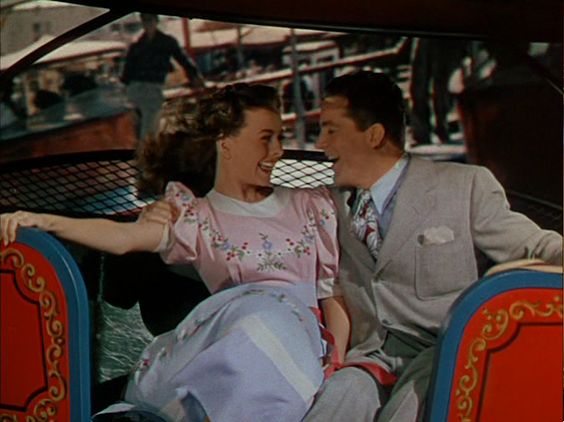
The 1945 musical movie State Fair won an Academy Award for Best Original Song, and the soundtrack has since become a beloved classic. The film stars Jeanne Crain and Dana Andrews as the leads, Margy Frake and Pat Gilbert, and is filled with classic musical numbers, including “It Might as Well Be Spring,” “That’s for Me,” “It’s a Grand Night for Singing,” and more. But did you know that neither Jeanne Crain nor Dana Andrews sang in the movie? Their voices were later dubbed using other singers.
At the time, dubbing singing voices for films was a controversial practice. Critics argued that it was dishonest and that actors should be judged on their actual vocal performances. However, the producers of State Fair in 1945 felt it was necessary in order to provide the audience with the best possible experience. So why were Crain and Andrew’s voices replaced? Well, it was for different reasons.
Jeanne Crain was a talented actress, but her singing ability was limited. She was able to carry a tune, but she was not a trained vocalist. This meant that for State Fair, the producers had to find someone who could provide a more polished vocal performance. Thus, the decision was made to dub Crain’s singing voice.
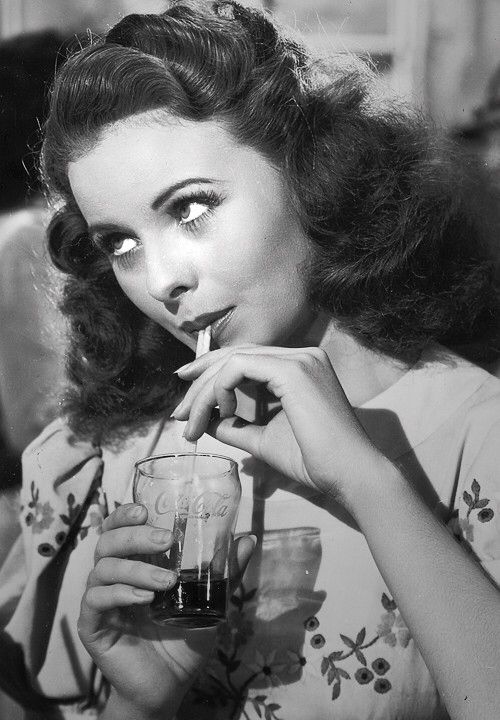
Minnesota-born singer Louanne Hogan’s voice was dubbed into State Fair, replacing Jeanne Crain’s voice. But you won’t find Hogan’s name listed in the original credits for State Fair. In fact, Louanne Hogan was never credited for this or the other four films for which she supplied her singing voice. Those included the 1944 The Princess and the Pirate, the 1944 I’ll Be Seeing You, the 1946 Centennial Summer, and the 1946 Margie.
When State Fair was released in 1945, audiences noticed something strange about the lead actor, Dana Andrews. His singing voice sounded different. The singing voice heard in the movie was actually that of singer and radio announcer Ben Gage, who was hired by 20th Century Fox to dub over Andrews’ singing.
Two stories have emerged to explain why Dana Andrews’ singing voice was replaced. As one story goes, the studio knew that Jeanne Crain was not trained as a singer and assumed that Dana Andrews was also untrained. But Andrews was, in fact, a trained singer. When the studio informed him that they had hired a ghost singer, Andrews didn’t speak up to advocate for himself. He knew how tough it was to break into the film industry, so he didn’t want to take an opportunity away from someone who was just trying to earn a living.
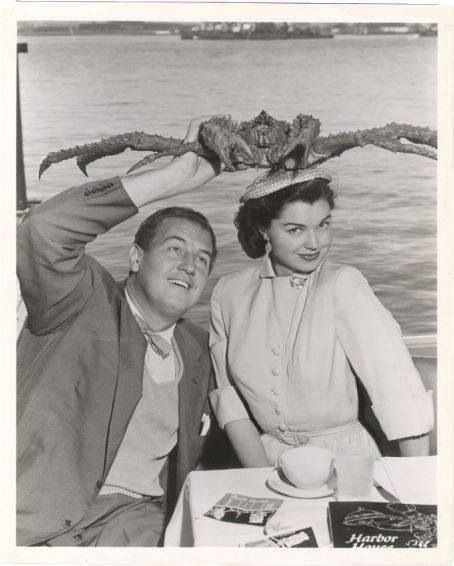
In a 2018 interview with Dana Andrews’ daughter, actress Jennifer Andrews, a second explanation emerged. In the interview, Jennifer explained that her father had a speech impediment that made it difficult for him to pronounce certain words and sounds. As a result, the studio decided to hire a professional singer to dub over his singing voice.
Like Louanne Hogan, Ben Gage was not credited for his singing in State Fair.
At the 1946 Academy Awards presentation, State Fair received two nominations, one for Best Music Scoring in a Musical Picture and the other for Best Original Song for “It Might as Well Be Spring,” a song that was credited as being sung by Jeanne Crain but was really dubbed with Louanne Hogan’s voice. The songwriting team of Richard Rodgers and Oscar Hammerstein II took home the Oscar for Best Original Song for “It Might as Well Be Spring.”