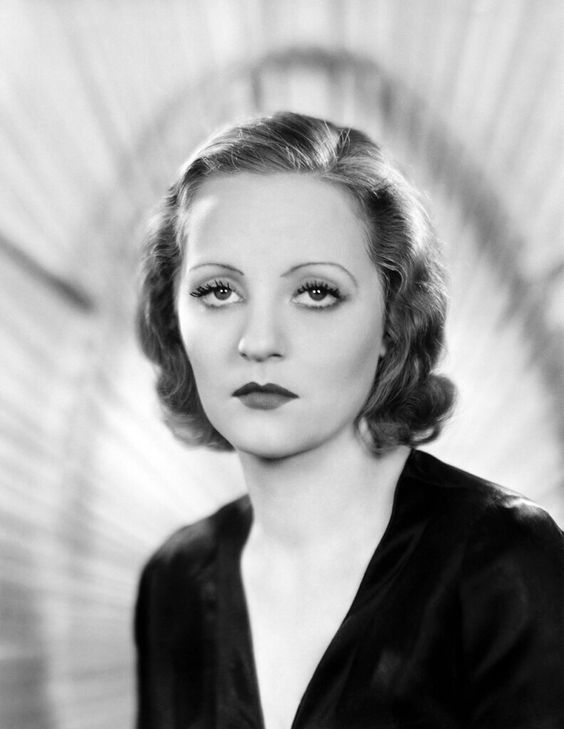
Tallulah Bankhead was an American actress and celebrity who achieved fame in the early to mid-1900s. She lived during a time in history when gender roles were clearly different for men and women and women were expected to be proper, demure, and conservative. None of those adjectives, however, could be applied to the flamboyant and controversial Bankhead. Her unconventional lifestyle and bohemian attitudes led her to be called the “Wild Woman” of the Golden Age of Hollywood.
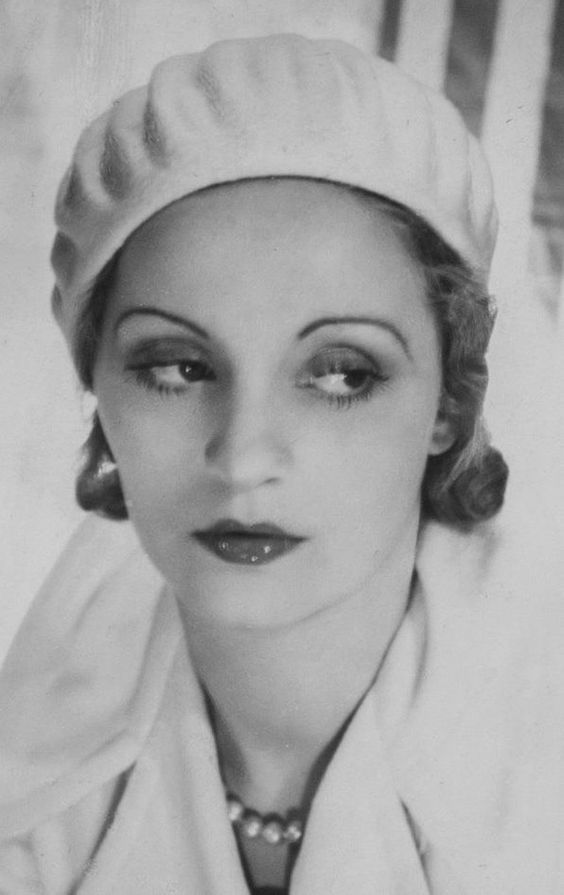
Tallulah Bankhead was born in 1901 in Huntsville, Alabama. Her mother died from complications of giving birth, leaving Tallulah and her older sister motherless. The girls were raised by a grandmother who found them to be uncontrollable. Tallulah, who had been a chubby, homely child, blossomed into a beautiful young woman during her teen years. She loved to draw attention to herself and soon headed to New York City, at just 15 years old, to find work as a model and actress. That led to a career on the stage and in Hollywood films that spanned several decades. Among her more well-known films were the 1944 Alfred Hitchcock movie, Lifeboat, and the 1945 film, A Royal Scandal, in which Bankhead played Catherine the Great.
It was her activities and behavior off screen that raised eyebrows in the 1920s and 1930s. Tallulah Bankhead was not a person to follow the rules and do what was expected of her. She was committed to living life on her own terms and her disregard for societal norms shocked many people. Bankhead had a reputation for her quick wit, sharp tongue, and provocative remarks. Her outspoken nature and irrelevant sense of humor often landed her in hot water.
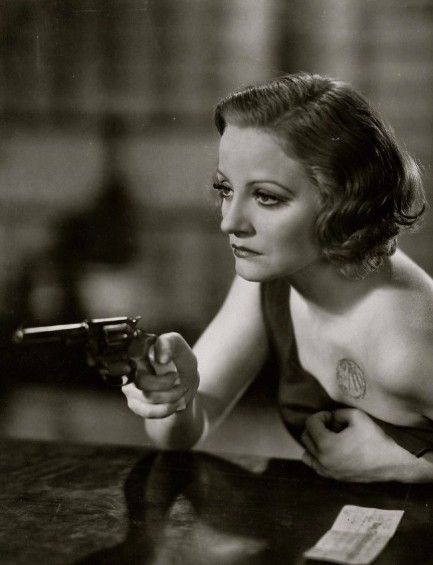
Bankhead was open about her sexuality and had numerous relationships with both men and women. When she arrived in New York City in 1918, she befriended three other actresses who were all lesbians or bisexual. The foursome hosted wild parties that included casual hook-ups and rampant drug use. Bankhead’s father advised her to avoid “alcohol and men” when she moved to New York, but she often quipped, “He didn’t say anything about women and cocaine.”
Bankhead’s sexual exploits weren’t confined to women. She appeared in the 1932 film, Devil and the Deep, which starred Gary Cooper. She explained that she only accepted the role so she could sleep with Cooper. In an era when discussions about sexuality and sexual trysts were more restrained, Bankhead openly bragged about her conquests and expressed her sexual desires. She had a strong libido and didn’t shy away from talking about it.
Among Bankhead’s long list of lovers are familiar names such as Gary Cooper, James Stewart, John Barrymore, Lord Napier Alington, John Emory, as well as Greta Garbo, Marlene Dietrich, Hattie McDaniel, Billie Holliday, and Patsy Kelly. She claimed to have slept with more than 5,000 people in her lifetime. Some of her exploits may have even crossed the line into predatory behavior. In the 1920s, when Bankhead lived temporarily in London, she was investigated by the authorities for allegedly seducing several schoolboys at Eton College.
Tallulah Bankhead was also known for her party-girl lifestyle. She was eccentric, glamorous, and a vivacious partygoer. She liked to have a good time and frequently hosted lavish social gatherings. She embraced the bohemian lifestyle. Her party appearances often made headlines and she was regularly featured in gossip columns.
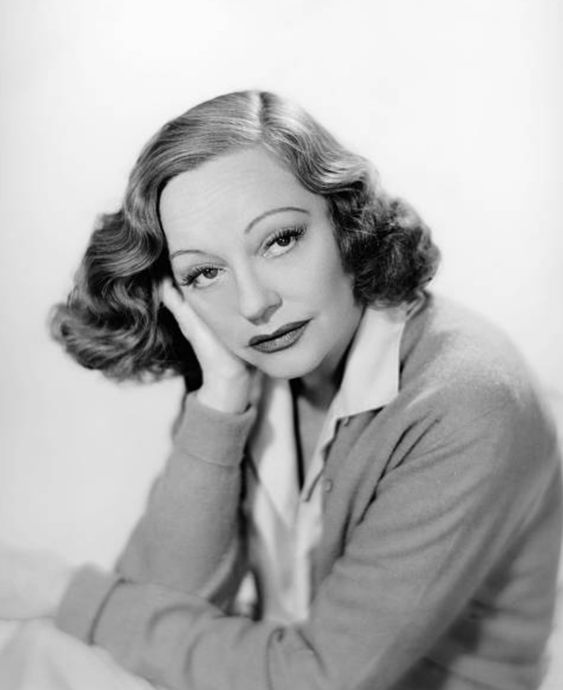
Although she claimed that cocaine was not an addictive substance, Tallulah Bankhead was known for her drug use and her addiction to cocaine. Later in her career, her drug abuse escalated to the point that she was taking a cocktail of strong drugs every night to help her sleep, then taking more drugs during the day to keep her awake. Like her love life, Bankhead was quite open about her drug use.
Her controversial lifestyle and filter-less comments led her to be listed in the Hays Commission’s Doom Book. She was one of about 150 Hollywood performers named in the book as being too immoral and unsuitable for the general public. The book was given to top executives at major Hollywood studios in an effort to convince them to blacklist these actors and actresses. Bankhead responded to the Hays Commission’s report by calling Will H. Hays an offensive name and went on to star in the 1941 film, The Little Foxes, in which she played a morally depleted, unsympathetic character.
Despite her controversial image and headline-grabbing antics, Tallulah Bankhead had a devoted fan base who admired her for her talent and stage presence, as well as for her nonconformist attitude and willingness to challenge conventional norms. Bankhead was a woman ahead of her time and a Hollywood actress that broke the mold. The captivating, fascinating, seductive, larger-than-life Tallulah Bankhead carved her own niche as the “Wild Woman” of the Golden Age of Hollywood.