The 7th Voyage of Sinbad, a fantasy adventure film, was produced by Charles H. Schneer and directed by Nathan H. Juran. It was made by Columbia Pictures, released in 1958, and starred Kerwin Mathews, Kathryn Grant, and Richard Eyer. But it wasn’t the actors, the director, or the studio that made the fantasy adventure movie a trailblazer in the film industry. It was the film’s creative and innovative special effects.
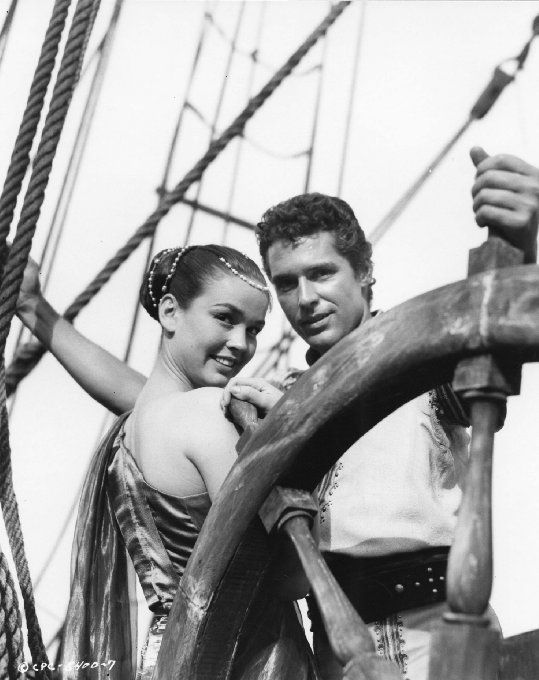
The idea for the film came from Schneer and Juran, who had previously worked together on another movie, 20 Million Miles to Earth. While this was a science fiction work, Schneer and Juran wanted to create a fantasy adventure movie. During this time, Hollywood was producing many science fiction and fantasy films, and Schneer and Juran believed that the ancient tales of Sinbad the Sailor would appeal to contemporary moviegoers. That is … if they could do justice to the fantastical tales.
Charles H. Schneer and Nathan H. Juran approached special effects artist Ray Harryhausen to help them bring their vision to life. While working as a special effects artist and animator in Hollywood in the 1940s and 1950s, Harryhausen developed a stop-action technique he called Dynamation. This process used a split screen to integrate live action with animated or stop-action figures to make it look as though the actors were seamlessly interacting with the models.
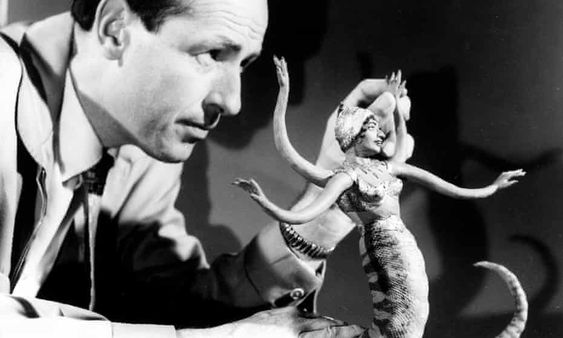
When tapped to work on The 7th Voyage of Sinbad, Ray Harryhausen had an opportunity to use his Dynamation technique with the Technicolor filming process. The 7th Voyage of Sinbad was one of the first films to use stop-motion animation extensively in a live-action movie and was the first movie that included Harryhausen’s Dynamation name in the credits. His attention to detail made the special effects in the film so realistic that audiences were awed. The special effects made the plot and characters of the movie more magical. Harryhausen’s special effects even created some characters, such as the Cyclops and the dragon. In all, it took Harryhausen 11 months to complete his work on the film.
The 7th Voyage of Sinbad was so well received that it spawned two more films, The Golden Voyage of Sinbad in 1973 and Sinbad and the Eye of the Tiger in 1977. The success of the film helped to popularize the fantasy adventure genre. Ray Harryhausen went on to create special effects for numerous other films, including Jason and the Argonauts, One Million Years B.C., and Clash of the Titans, which was his final film. Perhaps the most memorable movie scene credited to Ray Harryhausen appeared in the 1963 film, Jason and the Argonauts when the title character battled seven sword-wielding skeleton warriors.
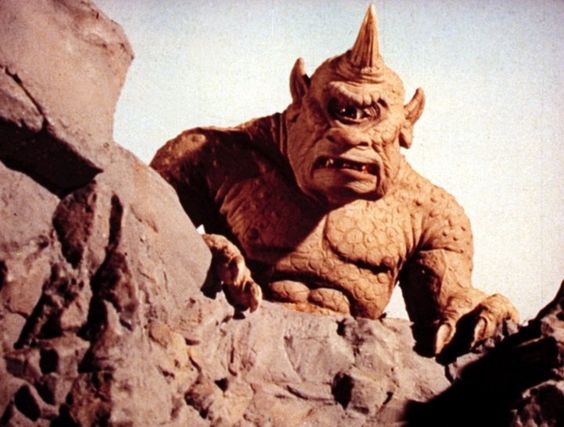
Harryhausen modeled his Cyclops after descriptions of the Greek god, Pan. He crafted this character to have the legs and hooves of a goat. For the Cyclops’ chest, arms, and torso, Harryhausen tweaked a latex body he made for a character in an earlier film, 20 Million Miles to Earth. For another character in The 7th Voyage of Sinbad, the cobra-lady, Harryhausen observed a belly dancer in Lebanon and patterned the movements after that. Years later, he used the cobra-lady as his inspiration for Medusa in Clash of the Titans. This wasn’t the only time he borrowed from The 7th Voyage of Sinbad for a future film. In one scene in The 7th Voyage of Sinbad, Sinbad engages in a sword fight with a skeleton. It was such a fan favorite that he had Jason fight a small army of skeletons in Jason and the Argonauts.
The special effects of Ray Harryhausen, which he pioneered in The 7th Voyage of Sinbad, influenced future filmmakers, including George Lucas and Steven Spielberg.