Few movie studios during the Golden Age of Hollywood had the same clout and prestige as Warner Bros. But who were the men behind the studio? The name of the studio implies that it was a family business, and as we will see, it was the brainchild of a set of impressive siblings. Let’s take a look at the Warner Brothers, the four brothers who founded one of Hollywood’s most influential film studios.
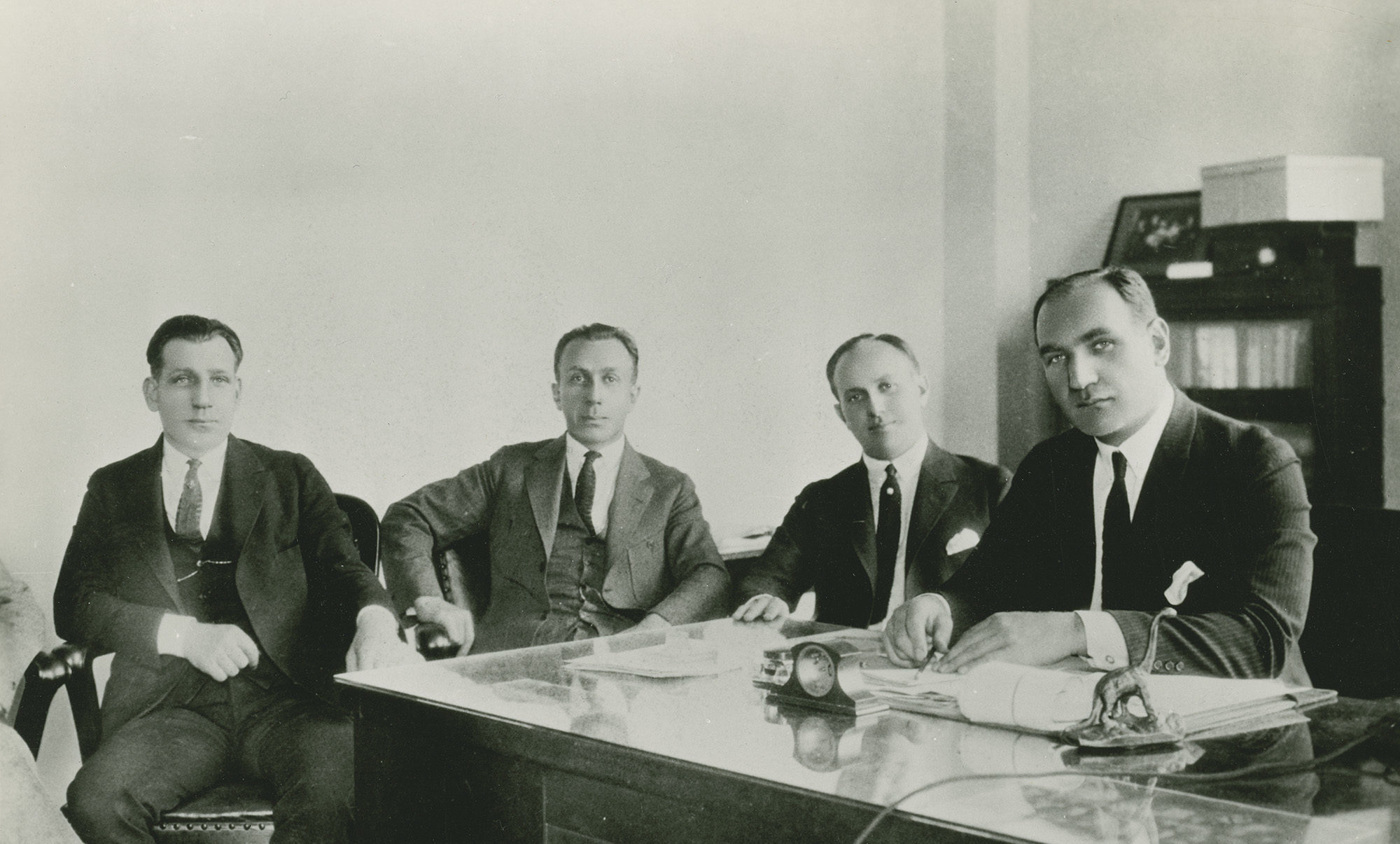
The Warner Brothers were four siblings from Poland who immigrated to Canada with their parents in the late 1800s. The brothers—Harry, Albert, Sam, and Jack—were all born in Krasnosielc, Poland in the 1870s and 1880s. The four brothers eventually settled in Youngstown, Ohio, where they opened a movie theater in 1903. The brothers were passionate about film. The more they watched the movies they showed in their theater, they wanted to create their own films. In 1904, they founded the Warner Bros. studio in New York City and began producing silent films.
In 1919, the brothers’ film, The Gold Digger, based on the Broadway play of the same name, was a huge success, but they struck gold when they signed an unlikely star to a studio contract … Rin Tin Tin, a dog rescued from war-torn France during World War I. A series of films featuring their canine star helped put Warner Bros. studios on the map. With a steady revenue stream, the brothers hired a head director, Ernst Lubitsch. His 1924 film, The Marriage Circle, was the year’s most successful movie. Warner Bros. was able to bring veteran Broadway actor, John Barrymore, on board with a long-term studio contract.

By the mid-1920s, Warner Bros. studios was arguably the most successful independent film studio and was poised to take on the “Big Three” Hollywood studios, Metro-Goldwyn-Mayer, Paramount Pictures, and First National.
The Warner brothers were pioneers in the use of sound in movies, producing the first feature-length film with synchronized dialogue, The Jazz Singer, in 1927. They were also the first studio to introduce color films and the first to create a wide release distribution system for movies. In the 1930s, Warner Bros. released a series of movie musicals, including 42nd Street, and some swashbuckling action films, like Captain Blood, starring Errol Flynn. Although the studio struggled amid the Great Depression, the popularity of their films saved Warner Bros. from bankruptcy.
Also in the early 1930s, the Warners introduced the first of their Looney Tunes animated cartoons, rivaling Walt Disney’s studio. Bugs Bunny, Porky Pig, Elmer Fudd, Daffy Duck, and more helped bring more success to the studio.
In addition to their technical achievements, the Warner Brothers also helped shape Hollywood’s culture. They were instrumental in creating the Motion Picture Association of America, the industry’s trade organization, and they helped develop the idea of the “star system,” which transformed actors into household names.
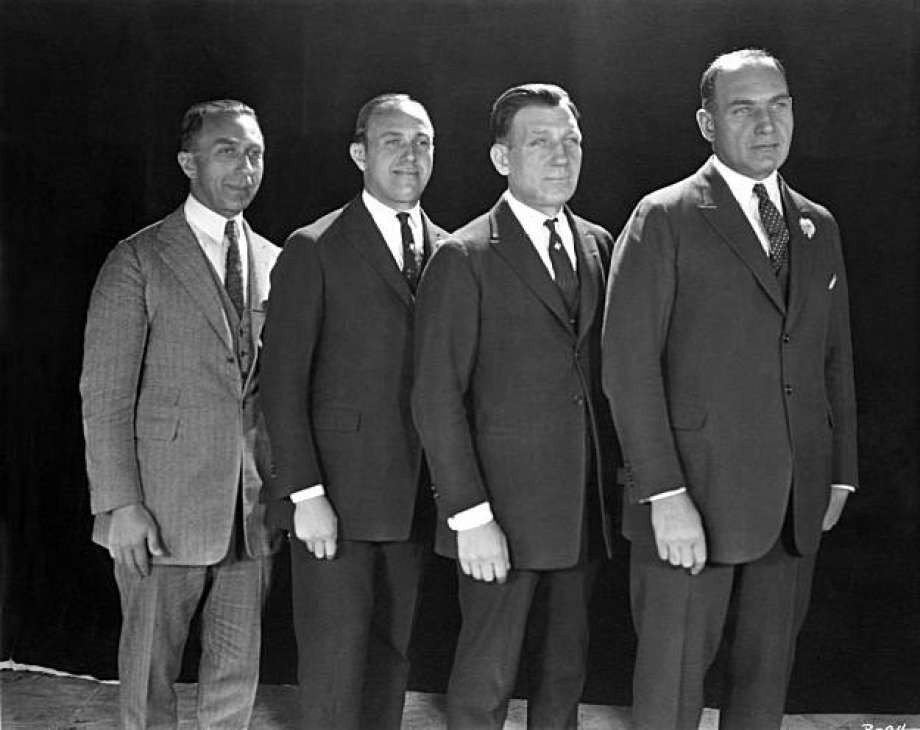
Harry, Albert, Sam, and Jack, the four Warner brothers, left a lasting legacy in Hollywood. Warner Bros. Studio’s biggest films of the Golden Age of Hollywood include Don Juan in 1926, The Adventures of Robin Hood in 1938, The Maltese Falcon in 1941, High Sierra in 1942, Casablanca in 1942, A Streetcar Named Desire in 1951, and Rebel Without a Cause in 1955. The studio they founded has gone on to produce some of the greatest films of all time, from Ocean’s Eleven to The Dark Knight to the Harry Potter series.
Sadly, brother Sam Warner passed away in 1927 and didn’t live to see the studio he founded with his brothers become a global success. His brother, Albert, remained with the studio until 1956 when he sold his share in the company to his remaining brothers. Albert Warner died in 1967. Harry Warner was one of the driving forces behind Warner Bros. studio’s success. He served as the studio’s president until 1956. He died two years later. Jack Warner, the brother most instrumental in introducing technical advancements at Warner Bros., took over as the studio’s president and guided the studio to the pinnacle of Hollywood movie studios. Jack died in 1978.
Though the four Warner brothers are no longer with us, their legacy lives on in their studio and in the films they helped create. The immigrant siblings from Poland, with a passion for film and innovative approach to production and distribution helped transform the movie industry from the silent film era to the Golden Age of Hollywood and to the present day.