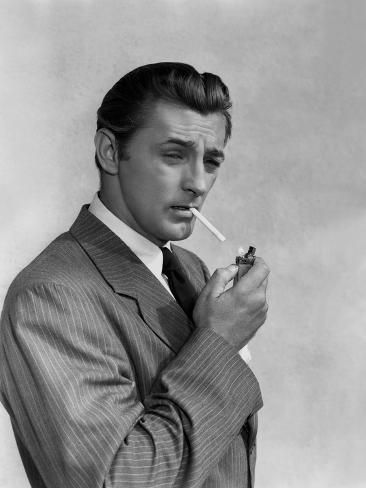
Today, public opinion about marijuana use has shifted. Many U.S. states have legalized marijuana or decriminalized it for medicinal or recreational use. During the Golden Age of Hollywood, however, pot was illegal across the country. In general, a person busted for possession faced a three-month jail and a $1000 fine. For a prominent member of society, such as a big-name Hollywood celebrity, the scandal and embarrassment of a drug arrest could be a career-killer. That’s why, leading man Robert Mitchum said during his arrest for marijuana possession on September 1, 1948, “Well, this is the bitter end of everything – my career, my marriage, everything.” But is that what ended up happening? Let’s see.
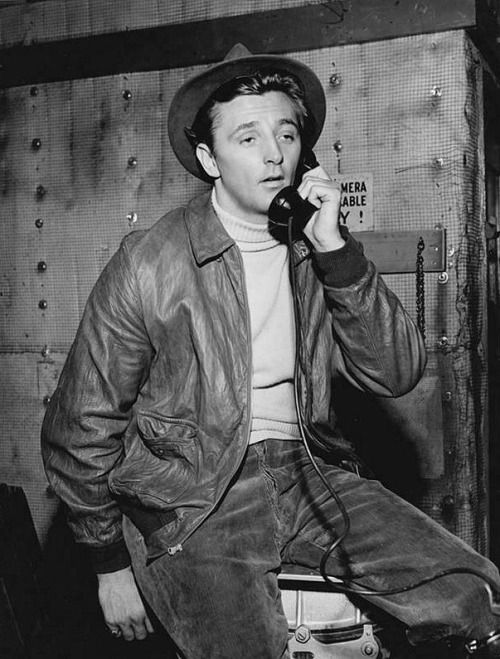
Robert Mitchum made his film debut as a bit character in the 1943 war drama, Gung Ho! From there, he was cast in more small, supporting roles. He appeared in Thirty Seconds Over Tokyo, Nevada, The Story of G. I. Joe, Out of the Past, Undercurrent, The Locket, and Crossfire. By this time, Mitchum’s star was on the rise. His career was on the fast track.
Late in the evening on August 31, 1948, Robert Mitchum, who was separated from his wife, Dorothy, and actress Lila Leeds were at a small party in Los Angeles’s Laurel Canyon. An undercover agent later explained that the house was secluded, difficult to find, hidden behind shrubbery, and with no close neighbors. The agent called it “ideally situated to be a ‘reefer resort’.” Indeed, Mitchum and Leeds were smoking marijuana when police busted in to raid the party. The raid was part of an organized sting operation that targeted Hollywood A-listers. Several other actors and actresses had been tipped off to the sting operation, but Leeds and Mitchum missed the memo.
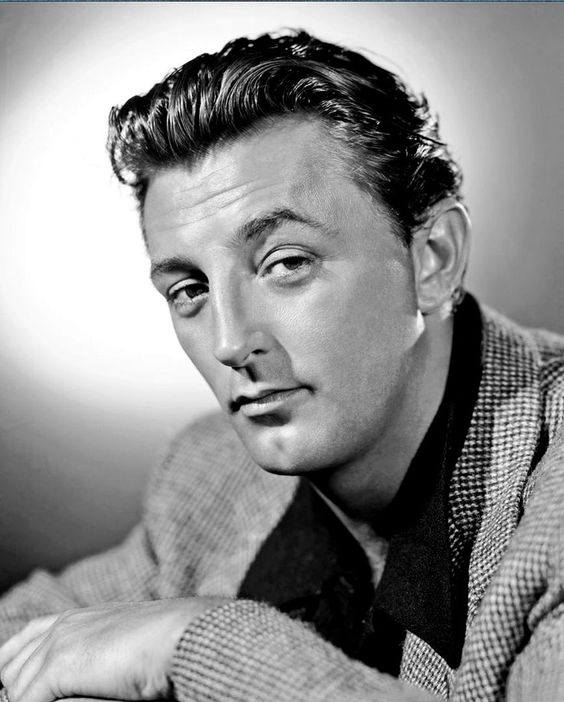
Robert Mitchum was charged with possession of marijuana and housed in the county jail. He was apparently remorseful and worried that the ensuing scandal would mark the end of his Hollywood career. At the time, he was separated from his wife, Dorothy Spence, who he married in 1940. The couple had three children together, James, Chris, and Petrine, however their relationship was on the rocks. Although they had separated, Mitchum was hopeful that they could reconcile. That it, until his arrest for marijuana possession.
At his trial, which was extensively covered by the celebrity tabloids, Mitchum was sentenced to 60 days in jail. He ultimately served only 47 days. Even during his time in jail, he still remained front page news. Reporters were allowed in the jail to snap pictures of him in his jail uniform, doing his assigned janitorial tasks, and behind bars. He was even interviewed. When one reporter asked Mitchum what jail was like, the actor quipped, “It’s a lot like Palm Springs, but without the riff-raff.”
Mitchum’s estranged wife, Dorothy, did not see the arrest as a reason to finally end their marriage. Instead, she returned to her husband’s side and staunchly supported him. The couple reconciled and remained married until Mitchum’s death in 1997.
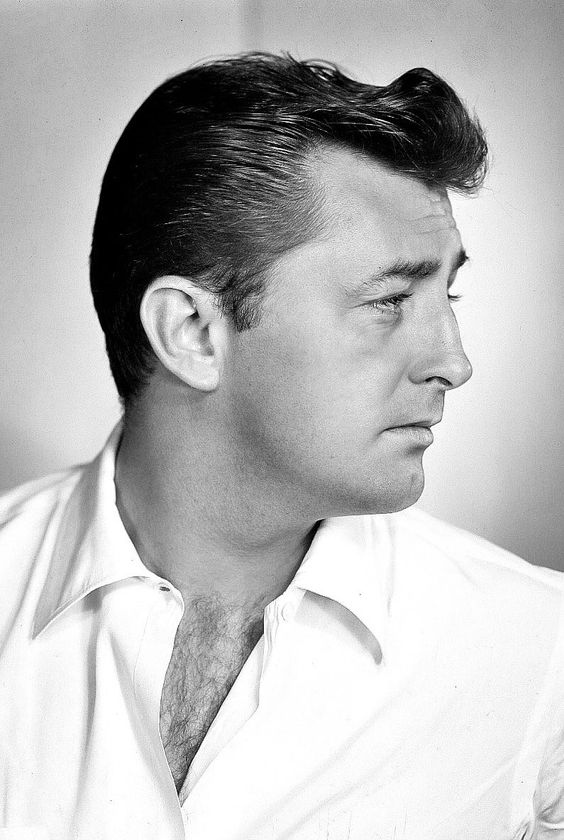
Robert Mitchum’s concerns that his marijuana arrest would end his Hollywood career also proved unfounded. After his release, he picked up right where he left off and starred in a string of successful films, including Rachel and the Stranger, The Night of the Hunter, Cape Fear, El Dorado, The Longest Day, and Farewell, My Lovely. It seemed that his highly publicized arrest only served to enhance his bad-boy reputation. He enjoyed a long, successful, and prolific Hollywood career that continued until his death.
A few years after his arrest, on January 31, 1951, Robert Mitchum’s marijuana conviction was overturned by the Los Angeles district attorney. It was shown that the drug bust that led to his arrest was a setup that was orchestrated by the Los Angeles Police Department to bring publicity to its anti-drug campaign. The narcotics agents wanted to make an example out of Mitchum to send a message to other Hollywood celebrities.
Robert Mitchum was not the first Hollywood actor to be arrested on drug charges and he certainly wasn’t the last. However, the arrest of Mitchum, the resulting media scandal, and the fact that his conviction seemed to elevate his reputation, makes this event a notable one in cinematic history.